

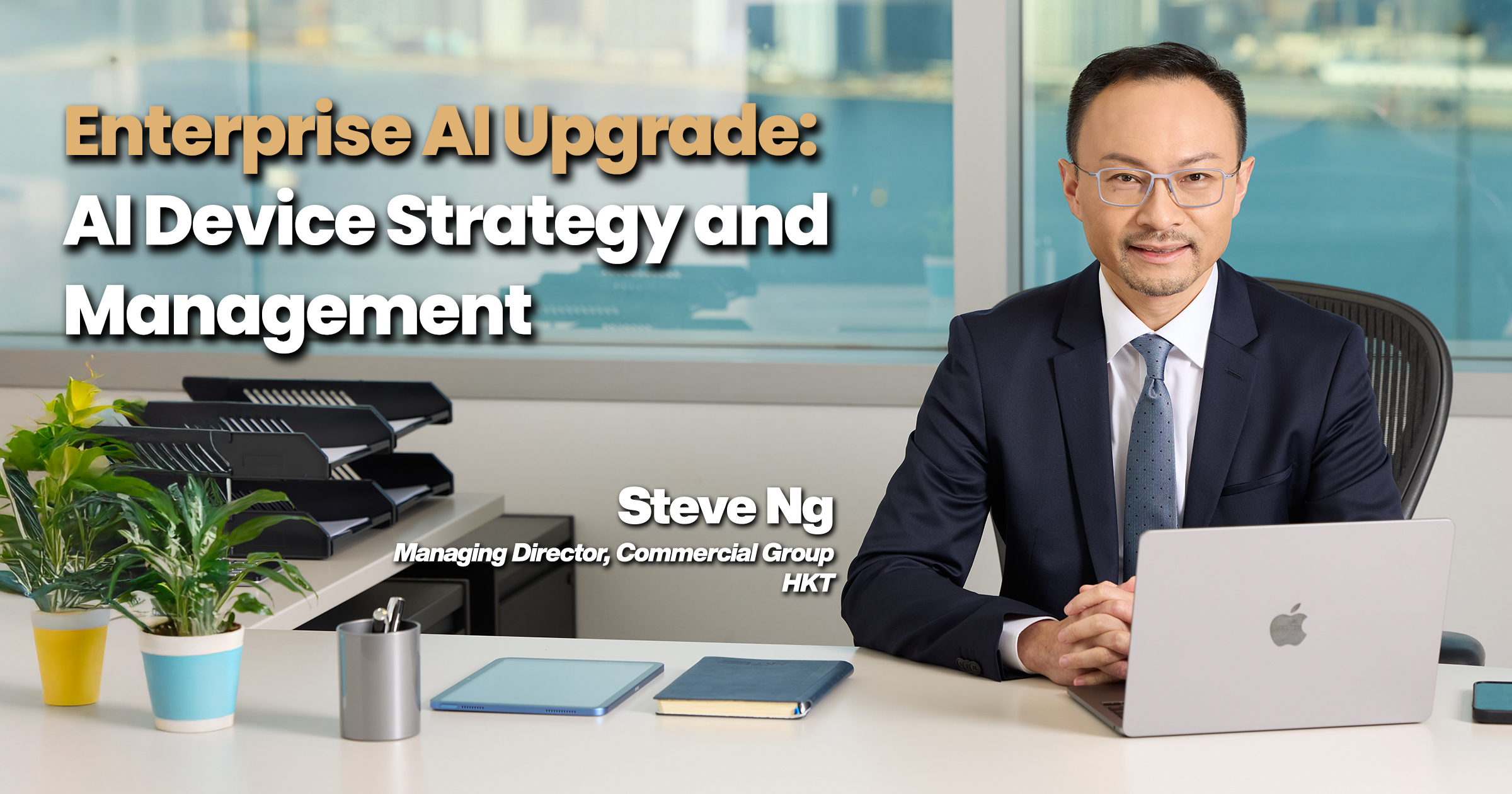
As artificial intelligence (AI) adoption accelerates, enterprise AI applications are no longer confined to the cloud. They are increasingly extending to employees’ everyday devices, where AI workloads run directly on-device. As on-device AI performance continues to improve, computers have evolved from simple productivity tools into important platforms that support AI applications, automate enterprise data processing and power core operational workflows. Selecting and managing AI devices has therefore become central to enterprise efficiency and execution.
Hybrid IT Architecture to Maximise AI Value
Mac and Windows PCs are currently the two most mainstream AI device platforms. Both support frontline AI applications, while offering distinct strengths in enterprise deployment, cybersecurity architecture and user experience.
Mac, powered by Apple Silicon and a unified memory architecture, can run large language models (LLMs) such as DeepSeek, Llama and Gemma efficiently and reliably, even in offline environments. This enables local computation and responsive processing of user requests. Apple Intelligence adopts an on-device model approach. When more complex instructions require additional computing power, Private Cloud Compute is activated. Data is processed in a stateless manner, meaning it is used solely to complete the immediate request and is not stored. The architecture also allows independent verification by privacy and security professionals, strengthening data protection and reducing the risk of data exposure.
In comparison, Windows PCs offer deep integration of Copilot at both system and application levels. AI capabilities extend directly into core productivity tools such as Microsoft 365, Edge and Outlook, enhancing cross-application collaboration and automation efficiency. With broad hardware compatibility and configurable specifications, Windows devices can leverage high-performance GPUs to run LLMs in local or cloud environments. Their strong compatibility with diverse enterprise systems makes them particularly suitable for business applications involving multi-layered workflows.
Flexible Device Selection to Reduce IT Burden and Enhance Enterprise Performance
Some enterprises now allow Mac and Windows platforms to operate in parallel. This enables organisations to leverage the strengths of both ecosystems while providing employees with greater flexibility.
When employees can select AI devices according to their business roles and work patterns, they do not need to re-adapt to unfamiliar platforms. AI tools integrate more naturally into daily operations, supporting enterprise-wide AI adoption and improving productivity and execution. At the same time, reduced retraining and platform transition requirements help lower technical support demand, contributing to long-term reductions in IT management burden and cost.
Flexible device selection can also support talent retention. An overseas market study shows that 87 percent of IT decision-makers and employees consider the ability to choose their own work device to be important.
One-Stop Device Managed Services to Strengthen AI Device Governance
However, implementing compatibility across Mac and Windows platforms cannot be achieved overnight. It requires structured initial configuration, as well as ongoing management and support. IT teams must maintain integration and support capabilities across both macOS and Windows environments to sustain smooth system operations.
To reduce transition costs and management complexity, enterprises may adopt a one-stop Device Managed Services covering both operating platforms. Through a single integrated management platform, organisations can oversee the full lifecycle of IT assets, including asset inventory, software licensing, deployment configuration, day-to-day technical support and secure decommissioning. Standardised and centralised management helps shorten audit timelines and strengthen compliance.
At the same time, Unified Endpoint Management (UEM) enables consistent data security and compliance policies to be applied through a single console. Device management coverage can extend to iOS, iPadOS and Android mobile devices, supporting AI applications across the broader enterprise mobility environment.
This cross-operating system device management model significantly reduces day-to-day administrative workload for IT teams, while establishing a secure and appropriate IT deployment foundation. It enables enterprises to fully realise the value of on-device AI within a high-reliability and well-governed framework.
Source: Steve Ng's Editorial on eDigest, 27 Feb 2026. Translated by 1O1O Corporate Solutions.