

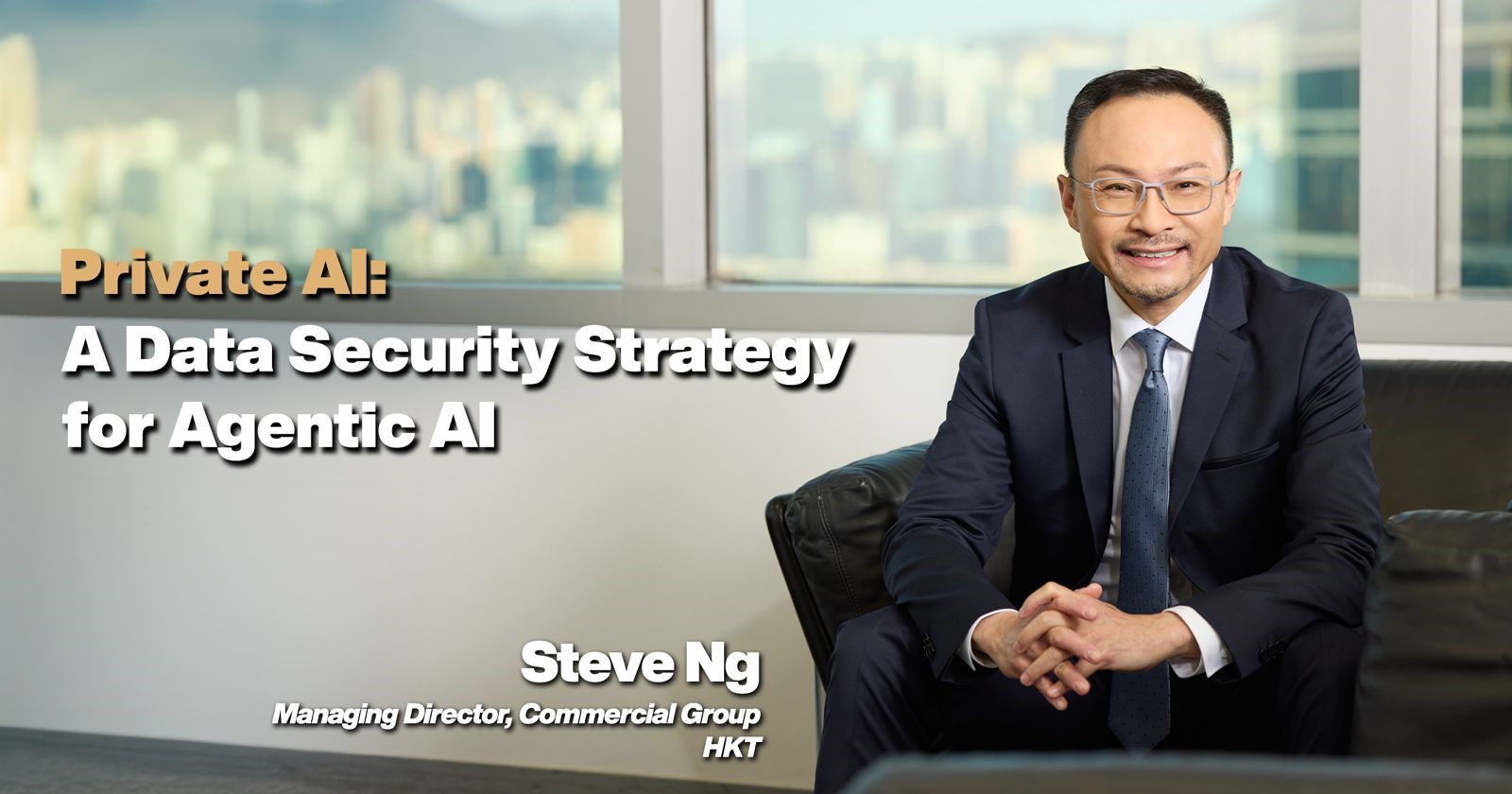
Although Generative AI (Gen AI) has been available for only three years, it has already become widely adopted by enterprises and an integral part of many business operations. As enterprises strive to unlock the full potential of Gen AI, industry attention is gradually shifting toward an even more transformative development: Agentic AI. Unlike Gen AI, Agentic AI is not limited to passively responding to prompts. It can autonomously plan, reason and execute complex tasks, significantly improving efficiency and scalability. However, this advancement also introduces unprecedented challenges for enterprises.
The strength of Agentic AI lies in its reasoning capabilities and its ability to act autonomously within defined boundaries. This allows enterprises to delegate repetitive or complex tasks to AI agents, freeing staff to focus on strategic work. This leads to faster decision-making, lower operating costs and an improved customer experience. In healthcare, for example, Agentic AI is already serving as an “intelligent medical assistant,” analysing patient records and doctors’ diagnoses to schedule medical examinations or adjust medication dosages, greatly enhancing medical efficiency. In business applications, enterprises are deploying AI agents to consolidate commercial data across sales, finance and customer behaviour. These AI agents perform predictive analysis and trend forecasting while automatically generating compliance and business reports.
However, granting AI autonomy requires deeper access to enterprise systems and sensitive data, introducing substantial risks to businesses. Since Agentic AI requires access to large volumes of sensitive information and operates deeply within business workflows, a malicious system of intrusion could result in more than just data leakage. Attackers could manipulate the AI’s decision logic, leading to erroneous or harmful actions. To address this, enterprises can deploy Agentic AI within a Private AI framework. This approach involves running AI models on internal corporate servers within a dedicated or controlled computing environment, secured by encrypted transmission. Sensitive information is not transmitted to public clouds or third-party platforms. This allows enterprises to benefit from Agentic AI while significantly reducing the risk of data leakage and retaining complete execution records to meet increasingly stringent regulatory requirements.
In addition to security considerations, autonomy itself introduces operational risks. If the instructions provided during deployment are imprecise or the data is inaccurate, the AI assistant may misinterpret requirements and make incorrect decisions during execution. This can lead to financial loss or reputational damage. Enterprises should therefore work with reliable and experienced solution providers to design the Agentic AI workflow, system integrations and risk management measures, validating instructions and settings are accurate while safeguard enterprise operations.
Looking ahead, Agentic AI will become a powerful force in driving digital transformation. Its value, however, will depend on its security and trustworthiness. By combining the autonomy of Agentic AI with the protection offered by Private AI, and by partnering with trusted technology specialists, enterprises can move forward with confidence and maintain leadership in this AI era.
Source: Steve Ng's Editorial on iMoney, 16 December 2025. Translated by 1O1O Corporate Solutions.